BIOINFORMATICS & BIOSTATISTICS CORE
 Overview
The Bioinformatics and Biostatistics Core provides comprehensive, high-quality bioinformatics and statistics expertise for Van Andel Institute and external organizations.
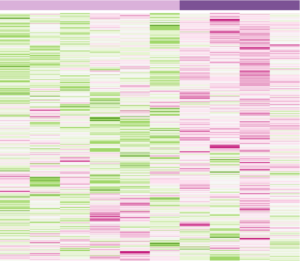
The Core develops and maintains automated and customizable workflows for processing and analyzing many types of genomic data; supports the design of rigorous, robust and reproducible experiments and proposals; assists in the preparation of manuscripts, grants and presentations; and provides education and training in the use of cutting-edge software and analysis methods. The Core can contribute to many types of bioinformatics or statistical projects.
Our Impact
We’re raising thousands to save millions.
We’re turning hope into action for the millions of people around the world affected by diseases like cancer and Parkinson’s. Find out how you can help us make a difference.
- 141 peer-reviewed papers published in 2025, 74 of which were in high-impact journals
- 15 VAI-SU2C Epigenetics Dream Team clinical trials launched to date
- 10 clinical trials and related projects supported by VAI through the International Linked Clinical Trials Program
Services include:
- Statistical consulting
- Experimental design
- Research proposal development
- Sample size determination
- Randomization procedures
- Manuscript preparation and data deposition
- Genome variant identification, annotation and visualization
- Analysis of high-throughput or genome-scale data
- Bulk and single-cell RNA-Seq and differential gene expression
- ChIP-Seq, ATAC-Seq, CUT&RUN
- Spatial molecular profiling
- Whole Genome Bisulfite Sequencing (WGBS)
- Metabolomics and lipidomics
- Systems-level bioinformatics
- Gene Over Representation Analysis (ORA)
- Gene Set Enrichment Analysis (GSEA)
- Interaction networks
- Functional enrichment analysis
- Pathway analysis
- Analysis, interpretation and presentation of data
- Time-series
- Tumor growth
- Drug response
- Genome assembly and annotation
- Joint analysis of multiple genomic data sets
- Custom application and tool development
For more information on services and pricing, please contact Bioinformatics and Biostatistics Core at [email protected].
Acknowledgments and Authorship
All work performed by VAI’s Core Technologies and Services should be acknowledged or considered for co-authorship in scholarly reports, presentations, posters, papers and all other publications. Proper acknowledgment allows us to obtain financial and other support that enables us to provide and maintain high-quality support and services. By acknowledging shared resource facilities and instrumentation in publications, presentations and other research communications, you play a critical role in ensuring their continued availability and future development.
Example acknowledgments:
- We thank the Van Andel Institute Bioinformatics and Biostatistics Core (RRID:SCR_024762), especially [staff name], for their assistance with [technique/technology].
- This research was supported in part by the Van Andel Institute Bioinformatics and Biostatistics Core (Grand Rapids, MI) (RRID:SCR_024762).
Selected Publications
2026
Mikkelsen SU, Al-Mousawi A, Puglisi AB, Vallentin AP, Mortensen AØ, Madaj Z, Hinoue T, Ottesen HN, Jespersen JS, Gillberg L, Tulstrup M, Hansen NR, Hansen JW, Andersen MK, Thomas SL, Isaguirre C, Sheldon R, Adams M, Burgos R, Baylin S, Mortensen BK, O’Connell CL, Severinsen MT, Laird P, Lykkesfeldt J, Jones P, Grønbæk K. 2026. Oral vitamin C supplementation in patients with clonal cytopenia of undetermined significance or lower-risk myeloid malignancies: Results from EVITA, a phase 2 randomized placebo-controlled trial. Cancer 132(19).
Panzeri I, Madaj ZB, Fagnocchi L, Apostle S, Tompkins M, Gallik K, Ma EH, Hostetter G, Jones RG, Pospisilik JA. 2026. Chronic high-fat diet does not alter overall cancer incidence in Trp53R270H/+ mice. Cancer Res Commun 6(6):1336–1350.
2025
Forton C, DeVries J, Lou M, Brundin S, Cave T, Anis E, Madaj ZB, Isaguirre C, Johnson A, Sheldon RD, Smart L, Bohnert KM, Kassien J, Holzgen O, Youssef NA, Khan T, Brundin L. 2025. Gut microbiome‑derived tryptophan metabolites predict relapse in alcohol use disorder. Brain Behav Immun.
Pérez-Mojica JE, Madaj ZB, Isaguirre C, Roy J, Lau KH, Sheldon RD, Lempradl A. 2025. Resolving early embryonic metabolism in Drosophila through single-embryo metabolomics and transcriptomics. Nat Metab.
Dahabieh MS, DeCamp LM, Oswald BM, Kitchen-Goosen SM, Fu Z, Vos M, Compton SE, Longo J, Foy NM, Williams KS, Ellis AE, Johnson A, Sodiya I, Vincent M, Lee H, Yao C, Wu T, Sheldon RD, Krawczyk CM, Jones RG. 2025. The prostacyclin receptor PTGIR is a NRF2-dependent regulator of CD8+ T cell exhaustion. Nat Immunol.
*Featured in a News & Views article
Compton SE, DeCamp LM, Oswald BM, Kitchen-Goosen SM, Lau KH, Fillinger R, Dahabieh MS, Vander Ark A, Krawczyk CM, Jones RG. 2025. IL-17 links the tumor suppressor LKB1 to gastrointestinal inflammation and polyposis. Sci Adv 11(25).
Xue Z, Xuan H, Lau K, Su Y, Wegener M, Li K, Turner L, Adams M, Shi X, Wen H. 2025. Expression of ENL YEATS domain tumor mutations in nephrogenic or stromal lineage impairs kidney development. Nat Commun 16:2531.
Panzeri I, Fagnocchi L, Apostle S, Tompkins M, Wolfrum E, Madaj Z, Hostetter G, Liu Y, Schaefer K, Yang C-H, Bergsma A, Drougard A, Dror E, PERMUTE, Chandler DP, Schramek D, Triche TJ Jr., Pospisilik JA. 2025. TRIM28-dependent developmental heterogeneity determines cancer susceptibility through distinct epigenetic states. Nat Cancer.
2024
Kaymak I, Watson MJ, Oswald BM, Ma S, Johnson BK, DeCamp LM, Mabvakure BM, Luda KM, Ma EH, Lau KH, Fu Z, Muhire B, Kitchen-Goosen SM, VanderArk A, Dahabieh MS, Samborska B, Vos M, Shen H, Fan ZP, Roddy TP, Kingsbury GA, Sousa CM, Krawczyk CM, Williams KS, Sheldon RD, Kaech SM, Roy DG, Jones R. 2024. ACLY and ACSS2 link nutrient-dependent chromatin accessibility to regulation of CD8 T cell effector responses. J Exp Med 221(9).
Lubben N, Byrnildsen JK, Webb CM, Li HL, Leyns CEG, Changolkar L, Zhang B, Meymand ES, O’Reilly M, Madaj Z, DeWeerd D, Fell MJ, Lee VYM, Bassett DS, Henderson MX. 2024. LRRK2 kinase inhibition reverses G2019s mutation-dependent effects on tau pathology progression. Transl Neurodegener 13(1):13.
Xue Z*, Qin L*, Xuan H*, Luo K*, Huang M, Xie L, Su Y, Xu L, Harsh J, Dale B, Shi X, Chen X, Kaniskan JÜ, Jin J#, Wen H#. 2024. A potent and selective ENL degrader suppresses oncogenic gene expression and leukemia progression. Sci Adv 10(35).
** Core recognized in the acknowledgments
Guak H, Weiland M, Vander Ark A, Zhai L, Lau K, Corrado M, Davidson P, Asiedu E, Mabvakure B, Compton S, DeCamp L, Scullion CA, Jones RG, Nowinski S, Krawczyk C. 2024. Transcriptional programming mediated by the histone demethylase KDM5C regulate dendritic cell population heterogeneity and function. Cell Rep 43(8):114506.
Sha Q, Galvis MLE, Madaj ZB, Keaton SA, Smart L, Edgerly YM, Anis E, Leach R, Osborne LM, Achtyes E, Brundin L. 2024. Dysregulated placental expression of kynurenine pathway enzymes is associated with inflammation and depression in pregnancy. Brain Behav Immun, 119:146–153.
House RJ*, Soper-Hopper MT*, Vincent MP, Ellis AE, Capan CD, Madaj ZB, Wolfrum E, Isaguirre CN, Castello CD, Johnson AB, Escobar Galvis ML, Williams KS, Lee H, Sheldon RD. 2024. A diverse proteome is present and enzymatically active in metabolite extracts. Nat Comm 15:5796.
*Co-first authors
Arumugam M, Tovar EA, Essenburg CJ, Dischinger PS, Beddows I, Wolfrum E, Madaj ZB, Turner L, Feenstra K, Gallik KL, Cohen L, Nichols M, Sheridan RTC, Esquibel CR, Mouneimne G, Graveel CR, Steensma MR. 2024. Nf1 deficiency modulates stromal environment in the pretumorigenic rat mammary gland. Front Cell Dev Biol 12.
2023
Sha Q, Fu Z, Escobar Galvis ML, Madaj Z, Underwood MD, Steiner JA, Dwork A, Simpson N, Galfalvy H, Rozoklija G, Achtyes EA, Mann JJ, Brundin L. 2023. Integrative transcriptome- and DNA methylation analysis of brain tissue from the temporal pole in suicide decedents and their controls. Mol Psych.
Diegel CR, Kramer I, Moes C, Foxa GE, McDonald MJ, Madaj ZB, Guth S, Liu J, Harris JL, Kneissel M, Williams BO. 2023. Inhibiting WNT secretion reduces high bone mass caused by Sost loss-of-function or gain-of-function in Lrp5. Bone Res 11(1):47.
Dues DJ, Tran Nguyen AP, Becker K, Ma J, Moore DJ. 2023. Hippocampal subfield vulnerability to α-synuclein pathology precedes neurodegeneration and cognitive dysfunction. npj Parkinsons Dis 9(125).
*Core included in acknowledgements
Liao J, Song S, Gusscott S, Fu Z, Vanderkolk I, Busscher BM, Lau KH, Brind’Amour J, Szabó PE. 2023. Establishment of paternal methylation imprint at the H19/Igf2 imprinting control region. Sci Adv 9(36).
Luda KM, Longo J, Kitchen-Goosen SM, Duimstra LR, Ma EH, Watson MJ, Oswald BM, Fu Z, Madaj Z, Kupai A, Dickson BM, DeCamp LM, Dahabieh MS, Compton SE, Teis R, Kaymak I, Lau KH, Kelly DP, Puchalska P, Williams KS, Krawczyk CM, Lévesque D, Boisvert FM, Sheldon RD, Rothbart SB, Crawford PA, Jones RG. 2023. Ketolysis drives CD8+ T cell effector function through effects on histone acetylation. Immunity.
Cui W, Huang Z, Jin S-G, Johnson J, Lau KH, Hostetter G, Pfeifer GP. 2023. Deficiency of the Polycomb protein RYBP and TET methylcytosine oxidases promotes extensive CpG island hypermethylation and malignant transformation. Cancer Res.
Compton SE, Kitchen-Goosen SM, DeCamp LM, Lau KH, Mabvakure, Vos M, Williams KS, Wong KK, Shi X, Rothbart SB, Krawczyk CK, Jones RG. 2023. LKB1 controls inflammatory potential through CRTC2-dependent histone acetylation. Mol Cell.
Jang HJ, Hostetter G, MacFarlane AW, Madaj Z, Ross EA, Hinoue T, Kulchycki JR, Burgos RS, Tafseer M, Alpaugh RK, Schwebel CL, Kokate R, Geynisman DM, Zibelman MR, Ghatalia P, Nichols PW, Chung W, Madzo J, Hahn NM, Quinn DI, Issa JPJ, Topper MJ, Baylin SB, Shen H, Campbell KS, Jones PA, Plimack ER. 2023. A phase II trial of guadecitabine plus atezolizumab in metastatic urothelial carcinoma progressing after initial immune checkpoint inhibitor therapy Clin Cancer Res: OF1–OF4.
Madaj ZB, Dahabieh MS, Kamalumpundi V, Muhire B, Pettinga J, Siwicki RA, Ellis AE, Isaguirre C, Escobar Galvis ML, DeCamp L, Jones RG, Givan SA, Adams M, Sheldon RD. 2023. Prior metabolite extraction fully preserves RNAseq quality and enables integrative multi-omics analysis of liver metabolic response to viral infection. RNA Biol 20(1).
Pérez-Mojica JE, Enders L, Walsh J, Lau KH, Lempradl A. 2023. Continuous transcriptome analysis reveals novel patterns of early gene expression in Drosophila embryos. Cell Genom.
2022
Meng Y, Wang G, He H, Lau KH, Hurt A, Bixler BJ, Andrea P, Jin S-G, Xu X, Vasquez KM, Pfeifer GP, Szabo PE. 2022. Z-DNA is remodelled by ZBTB43 in prospermatogonia to safeguard the germline genome and epigenome. Nature Cell Biol 24(7):1141–1153.
Beck JS, Madaj Z, Cheema CT, Kara B, Bennet DA, Schneider JA, Gordon MN, Ginsberg SD, Mufson EJ, Counts SE. 2022. Co-expression network analysis of frontal cortex during the progression of Alzheimer’s disease. Cereb Cortex 32(22):5108–5120.
Wiseman AK, Tiedemann RL, Fan H, Shen H, Madaj Z, McCabe MT, Pappalardi MB, Jones PA. 2022. Chromosome-specific retention of cancer-associated DNA hypermethylation following pharmacological inhibition of DNMTi. Commun Biol 5:528.
Paul EN, Grey JA, Carpenter TJ, Madaj ZB, Lau KH, Givan SA, Burns GW, Chandler RL, Wegienka GR, Shen H, Teixeira JM. 2022. Transcriptome and DNA methylome analyses reveal underlying mechanisms for the racial disparity in uterine fibroids. JCI Insight.
Yang CH*, Fagnocchi L*, Apostle S, Wegert V, Casani-Galdón S, Landgraf K, Panzeri I, Dror E, Heyne S, Wörpel T, Chandler DP, Lu D, Yang T, Gibbons E, Guerreiro R, Brás J, Thomasen M, Grunnert LG, Vaag AA, Gillberg L, Grundberg, E, Conesa A, Körner A, PERMUTE, Pospisilik JA. 2022. Independent phenotypic plasticity axes define distinct obesity subtypes. Nat Metab.
*Co-first authorship
**Highlighted in News & Views
***Core members Zachary Madaj and Emily Wolfrum are part of PERMUTE
2021
Neman J, Franklin M, Madaj ZB, Deshpande K, Triche Jr TJ, Sadlik G, Carmichael JD, Chang E, Yu C, Strickland BA, Zada G. 2021. Use of predictive spatial modeling to reveal that primary cancers have distinct central nervous system topography patterns of brain metastasis . J Neurosurg.
Waldhart AN, Muhire B, Johnson B, Pettinga D, Madaj ZB, Wolfrum E, Dysktra H, Wegert V, Pospisilik JA, Han X, Wu N. 2021. Excess dietary carbohydrate affects mitochondrial integrity as observed in brown adipose tissue. Cell Rep 35(5):109488.
Carpenter BL, Remba TK, Thomas SL, Madaj ZB, Brink L, Tiedemann RL, Odendaal HJ, Jones PA. 2021. Ooctye age and preconceptual alcohol use are highly correlated with epigenetic imprinting of a noncoding RNA (nc886). Proc Natl Acad Sci U S A 118(12):e2026580118.
. 2021. Mithramycin induces promoter reprogramming and differentiation of rhabdoid tumor. EMBO Mol Med 13(2):e12640.
Bagchi A, Madaj Z, Engel KB, Guan P, Rohrer DC, Valley DR, Wolfrum E, Feenstra K, Roche N, Hostetter G, Moore HM, Jewell SD. 2021. Impact of preanalytical factors on the measurement of tumor tissue biomarkers using immunohistochemistry. J Histochem Cytochem.
2020
Sha Q, Galvis MLE, Madaj ZB, Keaton SA, Smart L, Edgerly YM, Anis E, Leach R, Osborne LM, Achtyes E, Brundin L. 2024. Dysregulated placental expression of kynurenine pathway enzymes is associated with inflammation and depression in pregnancy. Brain Behav Immun, 119:146–153.
Grit JL, Pridgeon MG, Essenburg CJ, Wolfrum E, Madaj ZB, Turner L, Wulfkuhle J, Petricoin EF 3rd, Graveel CR, Steensma MR. 2020. Kinome profiling of NF1-related MPNSTs in response to kinase inhibition and doxorubicin reveals therapeutic vulnerabilities. Genes (Basel) 11(3):331
Marshall LL, Killinger BA, Ensink E, Li P, Li KX, Cui W, Lubben N, Weiland M, Wang X, Gordevicius J, Coetzee GA, Ma J, Jovinge S, Labrie V. 2020. Epigenomic analysis of Parkinson’s disease neurons identifies Tet2 loss as neuroprotective. Nat Neuro.
Diegel CR, Hann S, Ayturk UM, Hu JCW, Lim K, Droscha CJ, Madaj ZB, Foxa GE, Izaguirre I, VAI Vivarium and Transgenics Core, Paracha N, Pidhaynyy B, Dowd TL, Robling AG, Warman ML, Williams BO. 2020. An osteocalcin-deficient mouse strain without endocrine abnormalities. PLOS Genet.
Flores G, Everett JH, Boguslawski EA, Oswald BM, Madaj ZB, Beddows I, Dikalov S, Adams M, Klumpp-Thomas CA, Kitchen-Goosen SM, Martin SE, Caplen NJ, Helman LJ, Grohar PJ. 2020. CDK9 blockade exploits context-dependent transcriptional changes to improve activity and limit toxicity of mithramycin for Ewing sarcoma. Mol Cancer Ther.
2019
George JW, Fan H, Johnson B, Carpenter TJ, Foy KK, Chatterjee A, Patterson AL, Koeman J, Adams M, Madaj ZB, Chesla D, Marsh EE, Triche TJ, Shen H, Teixeira JM. 2019. Integrated epigenome, exome, and transcriptome analyses reveal molecular subtypes and homeotic transformation in uterine fibroids. Cell Rep.
Chatterjee D, Sanchez DS, Quansah E, Rey NL, George S, Becker K, Madaj ZB, Steiner JA, Ma J, Escobar Galvis ML, Kordower JH, Brundin P. 2019. Loss of one engrailed1 allele enhances induced alpha-synucleinopathy. J Parkinsons Dis 9(2):315–326.
Keaton SA, Madaj ZB, Heilman P, Smart L, Grit J, Gibbons R, Postolache TT, Roaten K, Achtyes ED, Brundin L. 2019. An inflammatory profile linked to increased suicided risk. J Affect Disord 247:57 65.
Harlow ML*, Chassé MH*, Boguslawski EA, Sorensen KM, Gedminas MJ, Goosen JM, Rothbart SB, Taslim C, Lessnick SL, Peck A, Madaj ZB, Bowman MJ, Grohar PJ. 2019. Trabectedin inhibits EWS-FLI1 and evicts SWI/SNF from chromatin in a schedule-dependent manner. Clin Cancer Res.
*Equal contributions
2018
Carpenter BL*, Zhou W, Madaj Z, DeWitt AK, Ross JP, Grønbaek K, Liang G, Clark SJ, Molloy PL, Jones PA. 2018. Mother-child transmission of epigenetic information by tunable polymorphic imprinting. Proc Natl Acad Sci U S A.
*Co-first authors
Liu M, Thomas SL, DeWitt AK, Zhou W, Madaj ZB, Ohtani H, Baylin SB, Liang G, Jones PA. 2018. Dual inhibition of DNA and histone methyltransferases increases viral mimicry in ovarian cancer cells. Cancer Res 78(20):5754–5766.
deCarvalho AC, Kim H, Poisson LM, Winn ME, Mueller C, Cherba D, Koeman J, Seth S, Protopopov A, Felicella M, Zheng S, Multani A, Jiang Y, Zhang J, Nam DH, Petricoin EF, Chin L, Mikkelsen T, Verhaak RGW. 2018. Discordant inheritance of chromosomal and extrachromosomal DNA elements contributes to dynamic disease evolution in glioblastoma. Nat Genet 50(5):708–717.
Rey NL, George S, Steiner JA, Madaj Z, Luk KC, Trojanowski JQ, Lee VM, Brundin P. 2018. Spread of aggregates after olfactory bulb injection of α-synuclein fibrils is associated with early neuronal loss and is reduced long term. Acta Neuropathol 135(1):65–83.
Killinger BA*, Madaj Z*, Sikora JW, Rey N, Haas AJ, Vepa Y, Lindqvist D, Chen H, Thomas PM, Brundin P, Brundin L, Labrie V. 2018. The veriform appendix impacts the risk of developing Parkinson’s. Sci Transl Med 10(465):eaar5280.
Mukherjee A, Patterson AL, George JW, Carpenter TJ, Madaj ZB, Hostetter G, Risinger JI, Teixeira JM. 2018. Nuclear PTEN localization contributes to DNA damage response in endometrial adenocarcinoma and could have a diagnostic benefit for therapeutic management of the disease. Mol Cancer Ther.
Senchuk MM, Dues DJ, Schaar CE, Johnson BK, Madaj ZB, Bowman MJ, Winn ME, Van Raamsdonk JM. 2018. Activation of DAF-16/FOXO by reactive oxygen species contributes to longevity in long-lived mitochondrial mutants in Caenorhabditis elegans. PLoS Genet 14(3):e1007268.
Beddows I, Rose LE. 2018. Factors determining hybridization rates in plants: A case study in Michigan. Perspec Plant Ecol Sys 34:51–60.
Peacock JD, Pridgeon MG, Tovar EA, Essenburg CJ, Bowman MJ, Madaj ZB, Koeman J, Boguslawski EA, Grit J, Dodd RD, Khachaturov V, Cardona DM, Chen M, Kirsch DG, Maina F, Dono R, Winn ME, Graveel CR, Steensma. 2018. Genomic status of MET potentiates sensitivity to MET and MEK inhibition in NF1-related malignant peripheral nerve sheath tumors. Cancer Res 78(13):3672–3687.
2017
Waldhart AN, Dykstra H, Peck AS, Boguslawski EA, Madaj ZB, Wen J, Veldkamp K, Hollowell M, Zheng B, Cantley LC, McGraw TE, Wu N. 2017. Phosphorylation of TXNIP by AKT mediates acute influx of glucose in response to insulin. Cell Rep 19(10):2005–2013.
Dues DJ, Schaar CJ, Johnson BK, Bowman MJ, Winn ME, Senchuk MM, Van Raamsdonk JM. 2017. Uncoupling of oxidative stress resistance and lifespan in long-lived isp-1 mitochondrial mutants in Caenorhabditis elegans. Free Radic Biol Med 108:362–373.
Martin KR, Zhou W, Bowman MJ, Shih J, Au KS, Dittenhafer-Reed KE, Sisson KA, Koeman J, Weisenberger DJ, Cottingham SL, DeRoos ST, Devinsky O, Winn ME, Cherniak AD, Shen H, Northrup H, Krueger DA, MacKeigan JP. 2017. The genomic landscape of tuberous sclerosis complex. Nat Commun 8:15816.
2016
Harlow ML, Maloney N, Roland J, Guillen Navarro MJ, Easton MK, Kitchen-Goosen SM, Boguslawski EA, Madaj ZB, Johnson BK, Bowman MJ, D’Incalci M, Winn ME, Turner L, Hostetter G, Galmarini CM, Aviles PM, Grohar PJ. 2016. Lurbinectedin inactivates the Ewing sarcoma oncoprotein EWS-FLI1 by redistributing it within the nucleus. Cancer Res 76(22):6657–6668.
Osgood CL, Tantawy MN, Maloney N, Madaj ZB, Peck A, Boguslawkski E, Jess J, Buck J, Winn ME, Manning HC, Grohar PJ. 2016. 18F-FLT Positron Emission Tomography (PET) is a Pharmacodynamic Marker for EWS-FLI1 Activity and Ewing Sarcoma. Sci Rep 6:33926.
Osgood CL, Maloney N, Kidd CG, Kitchen-Goosen S, Segars L, Gebregiorigis M, Woldemichael GM, He M, Sankar S, Lessnick SL, Kang M, Smith M, Turner L, Madaj ZB, Winn ME, Núnez LE, González-Sabin J, Helman LJ, Moris F, Grohar PJ. 2016. Identification of mithramycin analogues with improved targeting of the EWS-FLI1 transcription factor. Clin Cancer Res 22(16):4105–4118.
2015
Foley JM, Scholten DJ 2nd, Monks NR, Cherba D, Monsma DJ, Davidson P, Dylewski D, Dykema K, Winn ME, Steensma MR. 2015. Anoikis-resistant subpopulations of human osteosarcoma display significant chemoresistance and are sensitive to targeted epigenetic therapies predicted by expression profiling. J Transl Med 13(1):110.
Peacock JD, Dykema KJ, Toriello HV, Mooney MR, Scholten DJ 2nd, Winn ME, Borgman A, Duesbery NS, Hiemenga JA, Liu C, Campbell S, Nickoloff BP, Williams BO, Steensma MR. 2015. Oculoectodermal syndrome is a mosaic RASopathy associated with KRAS alterations. Am J Med Genet A 167(7):1429–1435.

Scott A. Givan, Ph.D.
Director, Bioinformatics and Biostatistics Core

Tim Triche, Jr., Ph.D.
Associate Professor, Department of Epigenetics
Translational Biological Informatics
Daniel Bautista, M.S.
Bioinformatics Analyst I, Bioinformatics and Biostatistics Core

Ian Beddows, Ph.D.
Senior Bioinformatics Research Scientist, Bioinformatics and Biostatistics Core

Hannah Damico, B.S., M.B.
Core Biostatistician I, Bioinformatics & Biostatistics Core

Daniella DeWeerd, M.S.
Bioinformatics Analyst I, Bioinformatics and Biostatistics Core

James Eapen, Ph.D.
Core Bioinformatics Scientist I, Bioinformatics & Biostatistics Core

Robert Fillinger, B.S., Ph.D.
Core Bioinformatics Scientist I, Bioinformatics & Biostatistics Core

Daisy Fu, Ph.D.
Core Bioinformatics Scientist II, Bioinformatics and Biostatistics Core

Kin Lau, Ph.D.
Principal Bioinformatics Scientist, Bioinformatics and Biostatistics Core

Zach Madaj, M.S.
Principal Biostatistician, Bioinformatics and Biostatistics Core

Emily Wolfrum, MPH
Core Biostatistician II, Bioinformatics and Biostatistics Core